Books About Nature, Food & Sustainability to Read This Sukkot
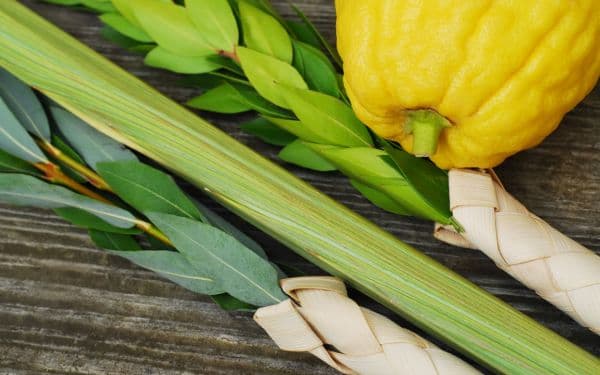
From Soil to Sukkah: Books About Nature, Food and Sustainability.
Sukkot gets us outside.
For one week, we eat under a roof made from what grows from the earth. We hold branches and fruit in our hands and celebrate the harvest. And we’re reminded, quite physically, that Jewish tradition has always had something to say about our relationship with the natural world.
But you don’t have to start with a Jewish text to explore those ideas.
If you’re interested in growing food, fermenting it, cooking with the seasons, reducing waste or simply spending more time outside, there are plenty of ways to connect those interests back to Jewish wisdom and identity.
From Jewish naturalists and wilderness spirituality to the unlikely history of the etrog, fermentation and food passed between generations, here are some books to dig into this Sukkot.
For the nature nerds

To Life: Jews Exploring Nature by Joel Greenberg
The introductory essay to Joel Greenberg’s To Life has a brilliant title: “The People of the Book Venture Outside.”
Published in 2026, the book challenges the idea that Jewish life and the study of nature somehow occupy different worlds.
Greenberg introduces us to eight Jewish scientists and naturalists whose interests ranged across botany, zoology, birds, mammals, spiders, reptiles, insects and ecology. Their relationships with Judaism were equally varied—some observant, some secular—but Jewish identity played a role in each of their stories.
It’s a fascinating way into a less familiar part of Jewish history: Jews who looked closely at the natural world and helped us understand it. For Sukkot, when so much of the ritual takes us outdoors, it feels like a particularly good time for the People of the Book to venture outside.
For anyone who’s ever wondered: why an etrog?

Etrog: How a Chinese Fruit Became a Jewish Symbol by David Z. Moster
Every Sukkot, we pick up an etrog as though this slightly unusual citrus fruit has always been an obvious part of Jewish life.
Its story is much stranger than that. David Z. Moster traces the etrog from its origins in China through India and Persia to the Land of Israel, where it became associated with Sukkot during the Second Temple period.
Along the way, he brings together botany, archaeology, biblical interpretation and Jewish history to explore how a fruit that originated thousands of kilometres away became one of Judaism’s most recognisable ritual objects.
It’s an enchanting rabbit hole: starting with something familiar from Jewish tradition and discovering an entire history hiding inside it.
For the big-picture thinkers

The Way Into Judaism and the Environment by Jeremy Benstein
What does Judaism actually have to say about the environment?
Quite a lot.
Jeremy Benstein looks at Jewish texts and traditions alongside contemporary questions about agriculture, biodiversity, pollution, sustainability and our responsibilities towards the natural world.
The book explores everything from the creation stories to Jewish holidays, asking what Jewish tradition can contribute to environmental thinking—and where Jewish communities might need to think differently too.
One particularly interesting idea is expanding how we think about mitzvot: beyond responsibilities between people and God, and between one person and another, towards responsibilities between people and the world around us.
For anyone interested in sustainability who hasn’t necessarily thought of it as a Jewish conversation, this is a good place to start.
For anyone who feels more connected outside

A Wild Faith: Jewish Ways into Wilderness, Wilderness Ways into Judaism by Rabbi Mike Comins
Jewish experience doesn’t only happen inside synagogues, around Shabbat tables or with a book open in front of us. A Wild Faith explores what Jewish spiritual practice can look like in the wilderness.
Rabbi Mike Comins brings Jewish teachings together with practical ways of experiencing the natural world, from meditative walking and wilderness blessings to mindfulness and simply spending time alone outside.
It’s less about studying nature than experiencing it. Perhaps changing where we practise Jewish tradition can change how we experience it.
For the fermenters, picklers and kitchen experimenters

The Art of Fermentation by Sandor Ellix Katz
Sauerkraut. Sourdough. Pickles. Kimchi. Yoghurt. At Adamama we love a little fermentation.
Fermentation is ancient, practical, slightly unpredictable—and very much alive.
Sandor Ellix Katz’s The Art of Fermentation has become a modern classic on the subject, exploring fermentation techniques and traditions from around the world rather than simply offering a collection of recipes.
It isn’t a book about Judaism or Sukkot. But that’s partly why it belongs in this curated booklist. Sukkot is a harvest festival, and fermentation is one of humanity’s oldest answers to a very practical harvest question: what do we do with abundance before it disappears?
Preserving food also opens up bigger conversations about seasonality, food traditions and the knowledge passed between generations. Sometimes connecting with the earth can be as simple as putting something in a jar and seeing what happens.
For anyone who hates throwing good food away

The Everlasting Meal Cookbook: Leftovers A–Z by Tamar Adler
What can you do with apple skins? Carrot tops? Cooked grains? A slightly strange collection of things left in the fridge?
Tamar Adler sees possibilities where the rest of us might see scraps. The Everlasting Meal Cookbook is organised around leftovers, with thousands of ideas for transforming ingredients that might otherwise be forgotten or thrown away.
It’s practical sustainability rather than sustainability as an abstract idea. And there’s an obvious Jewish conversation sitting alongside it: bal tashchit, the prohibition against needless destruction and waste. The book isn’t a guide to bal tashchit, but it offers a very contemporary way into the idea. How might we value what we already have before reaching for something new?
For the cooks who keep family stories alive

Ellie’s Table: Food from Memory and Food from Home by Ellie Bouhadana
Food can tell us where we’ve come from.
In Ellie’s Table, Melbourne cook Ellie Bouhadana brings together recipes and stories shaped by her Sephardic-Moroccan and Ashkenazi-Eastern European Jewish heritage, alongside the influence of time spent cooking and eating in Italy.
This is food as memory, inheritance and something living—recipes and traditions carried forward rather than preserved behind glass. Bouhadana also celebrates cooking with the seasons and the simple pleasure of eating together.
The book won The Jewish Independent Award for Young Jewish Writers at the 2025 Shalom Collective Australian Jewish Writer Awards. For us, it’s a reminder that Jewish identity isn’t only something we learn about. We cook it, adapt it, share it and pass it around the table.
For the veg people

Salad for Days by Alice Zaslavsky
Sukkot is a harvest festival, so it feels right to give vegetables some attention.
Australian cook and author Alice Zaslavsky’s Salad for Days is built around making vegetables genuinely exciting, with recipes organised for warmer and cooler days and plenty of ideas for working with what’s already in the fridge.
It’s playful, practical and firmly connected to seasonality. Eating seasonally asks us to notice what’s actually growing around us, rather than treating food as something disconnected from place or time.
For those of us in Australia, that’s particularly relevant. Sukkot arrives in spring—not autumn—so our experience of a Jewish harvest festival happens among new growth, longer days and a completely different seasonal table from the Northern Hemisphere.
And if you’re ready for more Alice, her next cookbook, Weeknights with Alice, arrives on 29 September 2026—right in the middle of Sukkot.
From the page to the garden
Sukkot has always brought Jewish life a little closer to the earth.
These books take that relationship in different directions—through Jewish history and wisdom, food and family, wilderness, fermentation, seasonality and sustainability.
Because exploring Jewish identity doesn’t always have to begin with a Jewish text. Sometimes it begins with a question about an etrog, or figuring out what to do with the vegetables growing in the garden.
And sometimes it’s simply sitting outside, sharing food with other people, and noticing what’s around us.